
News and Opinions
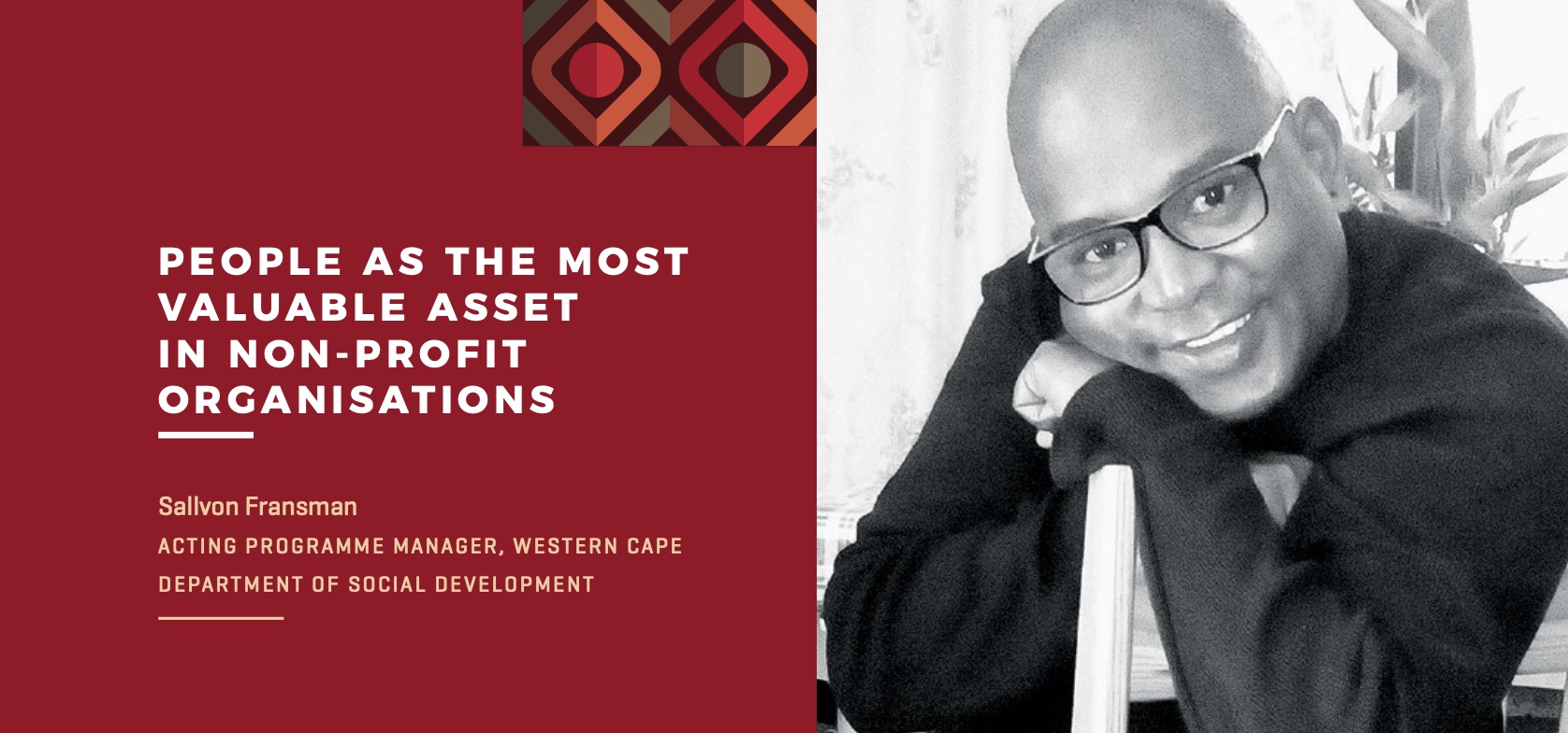
People as the Most Valuable Asset in Non-Profit Organisations
Sallvon Fransman, Acting Programme Manager, Western Cape Department of Social Development
Introduction
With the recent amendments to the Non-Profit Organisations (NPO) Act 71 of 1997, enacted in April 2023 to curb money laundering and terrorist financing, it has become increasingly important to recognise the central role of people in ensuring compliance and sustaining the work of non-profit organisations. At the heart of an NPO lies the goal of sustainable community development, particularly for marginalised communities. Therefore, collective effort, diverse perspectives, and shared commitment are not just desirable—they are essential for achieving social accountability, integrity, and adherence to the new legislative framework.
Context and Background
The NPO Act was amended by the General Laws (Anti-Money Laundering and Combating Terrorism Financing) Amendment Act, No. 22 of 2022. These changes are intended to enhance transparency, safeguard the sector from financial abuse, and support the continued trust placed in NPOs to contribute meaningfully toward building sustainable communities.
Who are the People in Non-Profit Organisations?
As Bujak (2018) notes, organisations cannot exist without people. It is people—and their unique qualities—who make a lasting difference in the services organisations deliver to communities. Typically, a non-profit organisation comprises six vital groups:
- Volunteers – Often regarded as the heartbeat of NPOs.
- Staff Members – The operational backbone of daily functions.
- Board Members – Strategic leaders and visionaries.
- Service Users – The inspiration and driving purpose behind the organisation's work.
- Donors – Financial enablers of the organisation's programmes and services.
- Community Partners and Stakeholders – Collaborative agents who help realise the organisation's mission.
Each of these groups must embody collective efforts, embrace diverse perspectives, and demonstrate shared commitment to ensure successful compliance with the amended NPO Act.
Towards Collective Efforts
According to Brinkerhoff et al. (2015), collective efforts are only possible when collective leadership exists. Collective leadership is defined as a group of individuals working together toward a shared goal. It is most effective when individuals are internally and externally motivated to contribute their talents, skills, and energies toward the organisation's mission. Crucially, this type of leadership thrives on trust, power-sharing, transparency, accountability, and a culture of shared learning.
Furthermore, when collective efforts are recognised and implemented, they generate a powerful ethos of ownership, creativity, and change. Such synergy enables organisations to declare: "We have achieved this together."
Embracing Diverse Perspectives and Shared Commitment
Tynes (2022) underscores the value of diverse perspectives within organisations, noting that diversity promotes openness to different ideas, cultures, and experiences, ultimately enhancing organisational culture. By drawing from a broad talent pool, NPOs not only improve internal practices but also provide more responsive and inclusive services to beneficiaries.
A diverse workforce - spanning various cultural, gender, and racial backgrounds - fosters innovation and comprehensive planning. This richness of perspective is key to aligning with and effectively implementing the NPO Amendment Act 22 of 2022.
Organisational commitment refers to the emotional and professional attachment individuals have to their organisation (Bartlett, 2001). Committed staff and volunteers reduce turnover, boost productivity, and ensure consistent, mission-aligned action.
As Guo et al. (2005) suggest, today's non-profit sector increasingly relies on alliances and partnerships across various sectors to enact social change. Shared commitment across these collaborative relationships generates unity, strengthens motivation, enhances teamwork, and aligns efforts toward achieving organisational objectives—including compliance with the updated legislative framework.
Practical Application: Characteristics and Interventions
Having worked in the sector since 1992, I have witnessed first-hand the enduring impact of people driven by passion for human rights, justice, and community upliftment. In the 1990s, their voluntary contributions exemplified collective effort, diverse thought, and shared commitment.
This ethos is urgently needed today, particularly in responding effectively to the legislative amendments. Table 1 highlights how one can use the key characteristics and apply it in a practical intervention.

Conclusion
People are the cornerstone of non-profit organisations. Whether volunteers, staff, board members, donors, or community partners, their collective actions, diverse inputs, and shared vision are crucial to the success and sustainability of the sector. Recognising their roles and creating space for authentic collaboration is not only vital for development, but essential for ensuring compliance with South Africa's evolving legal landscape.
References
- Bartlett, K.R. (2001) 'The relationship between training and organisational commitment: a study in the health care field', Human Resource Development Quarterly, 12(4), pp. 335–352.
- Bujak, A. (2018) The Art of Leading Collectively: Co-Creating a Sustainable, Socially Just Future. San Francisco: Berrett-Koehler.
- Brinkerhoff, D.W., Wetterberg, A. and Dunn, S. (2015) 'Service delivery and legitimacy in fragile and conflict-affected states', Public Management Review, 17(2), pp. 241–258.
- Guo, C., Brown, W.A., Ashcraft, R., Yoshioka, C.F. and Dong, H.K.D. (2005) 'Strategic human resources management in non-profit organisations', Review of Public Personnel Administration, 31(3), pp. 248–267.
- Preskill, H., Gopal, S., Mack, K. and Cook, J. (2008) Evaluating Complexity: Propositions for Improving Practice. California: FSG Social Impact Advisors.
- Tynes, S. (2022) 'Diversity and Inclusion in the Non-profit Sector: Driving Impact Through Representation', Journal of Organisational Culture, 34(2), pp. 113–125.
This article was first published in Inyathelo's 2025 Annual Report.